Hold the Slope and Reclaim the Yard
Retaining walls in Gainesville for preventing soil erosion and creating level usable space on sloped properties
Keller Outdoors Living, LLC builds engineered retaining walls that hold back soil on sloped properties and create flat, usable areas where the ground used to wash out or tilt too steeply for furniture or planting. You see the problem most clearly after a heavy rain, when loose soil slides downhill, mulch migrates into the driveway, and the lawn develops bare patches where water cuts channels through the grade. A retaining wall stops that movement and gives you a stable terrace or border that stays in place year after year.
The installation begins with excavation to reach solid, undisturbed soil, then a compacted gravel base is laid to provide drainage and prevent frost heave. Block, stone, or poured concrete is set in courses, with each row stepped back slightly to resist the pressure of the soil behind it. In Gainesville, where clay soil expands when wet and contracts when dry, drainage is managed with perforated pipe and gravel backfill that carries water away from the wall rather than allowing it to build up behind the structure.
If your yard has a slope that limits how you use the space, reach out for a site assessment to discuss wall height, material options, and drainage requirements.
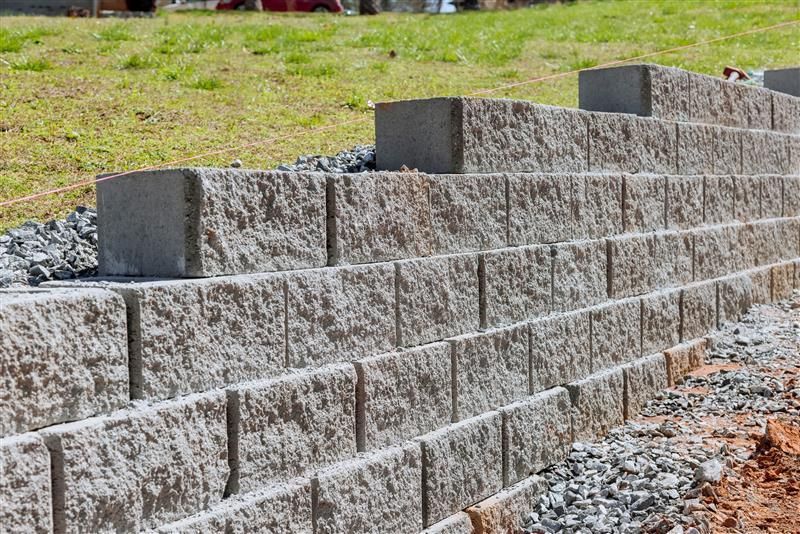
Once the wall is in place, the soil behind it stays put. Erosion stops, runoff slows, and you gain level ground that can support a patio, garden bed, or seating area without worrying about shifting or washout. The wall also defines the space visually, creating a clear separation between different yard zones and adding structure to the overall landscape design.
Keller Outdoors Living, LLC uses materials chosen for both durability and appearance, whether that means tumbled block that mimics natural stone, cut stone with tight mortar joints, or modular systems that allow for curves and terracing. The wall is built to match the scale of the slope and the style of your home, and cap stones or coping can be added to finish the top edge and provide a clean, finished look.
The work includes excavation, base preparation, drainage installation, and wall construction up to the height needed for the grade change. It does not include regrading large sections of the yard beyond the immediate wall footprint, removal of mature trees or root systems that interfere with placement, or planting behind the wall, though those elements can be coordinated separately.
Common Questions About Retaining Walls
Property owners in Gainesville often want to know how retaining walls handle drainage, how high they can be built, and what happens to the soil behind them over time.
What keeps water from building up behind the retaining wall?
A perforated drain pipe is installed at the base of the wall, surrounded by gravel, which collects groundwater and channels it to a discharge point rather than letting pressure build against the back of the wall.
How tall can a retaining wall be before it needs engineering?
Walls over four feet in height typically require engineered plans and sometimes a permit, depending on local codes and the load they are supporting.
When should you install a retaining wall instead of regrading the slope?
If the slope is too steep to mow safely or if regrading would push soil into areas you want to preserve, a retaining wall gives you a vertical solution that saves space and protects existing features.
Why do some retaining walls lean or crack after a few years?
Inadequate drainage, poor base preparation, or using materials not rated for the wall height are the most common causes of failure.
How long does it take to build a retaining wall?
A single-tier wall up to three feet tall and twenty feet long typically takes two to three days, including excavation, base work, and cleanup.
Keller Outdoors Living, LLC will evaluate your slope, soil conditions, and drainage patterns to recommend a retaining wall design that solves the problem and fits your property. Call the team in Gainesville to schedule a site assessment and start planning the wall that opens up your yard.